

Quick answer: after your first half marathon, take about a week of walking and very light movement, then spend the second week on short, easy runs. Bring back normal easy running and strides in week three, and only add one harder session in week four. Pick your next goal once your legs feel normal again, not on the drive home from the race.
Congratulations. You’ve just run 21.1 km, and that’s a big step. Many runners who finish their first half marathon say the same thing: “I never thought I could do that.”
The next four weeks matter more than most people think. Get them right and you come back fresher, keep the fitness you built and move on to your next goal. Get them wrong, usually by racing again too soon or jumping straight into a new plan, and you join the runners who pick up a calf or knee injury in December and lose the whole winter.
Here’s how I guide runners through the month after a first half marathon.
Why does recovery matter so much after a first half marathon?
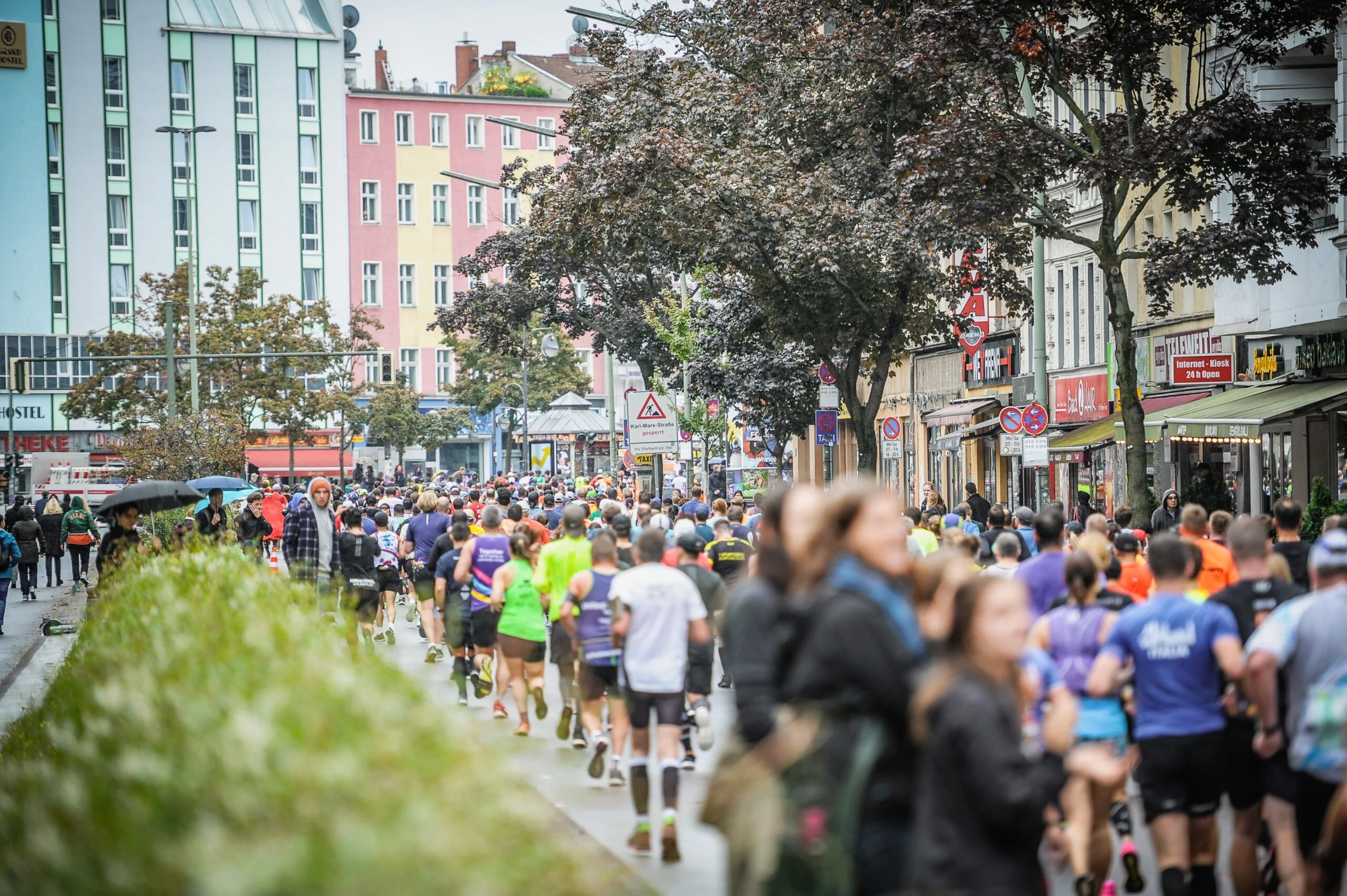
A half marathon is a hard effort, even if you ran it slowly. For a first-timer it’s often the longest run of their life, done on race-day adrenaline, on hard roads and in new conditions.
The damage isn’t only tired legs. Muscles, tendons and your immune system all need time. You feel “fine” after three days because the soreness has gone, but the tissue underneath is still repairing. That gap between feeling fine and being recovered is where most post-race injuries come from.
My whole approach is built on a simple cycle: the right stress, then recovery, then adaptation. The race was the stress. The adaptation, the fitness you keep, only happens if you let the recovery happen.
Runner takeaway: feeling fine is not the same as being recovered. Plan the next four weeks before you feel ready to run hard again.
What should you do in week 1?
Week one is about moving, not training.
- Days 1 to 3: walk every day, 20 to 40 minutes at an easy pace. Gentle mobility for hips, calves and hamstrings. Eat well, especially protein and carbohydrates, and sleep more than usual.
- Days 4 to 7: keep walking. If you feel good, an easy cycle or swim of 20 to 30 minutes is fine.
I believe in active recovery. A rest day doesn’t mean 24 hours on the sofa. That’s the “365” in RunningFitness365: you move every day, but at the right level.
What I don’t want to see in week one is a “shake-out” 10 km because the sun is out and you feel strong. Save it.
Runner takeaway: walk, move, eat and sleep. No running is needed in week one, and you lose nothing by waiting.
How do you restart running in week 2?
In week two you go back to running, but short and easy.
- 3 or 4 runs of 25 to 35 minutes.
- Truly easy, conversational pace. You should be able to speak in full sentences.
- Flat routes if you can, and run on how you feel, not on your watch.
Most amateur runners run their easy runs too fast, and after a race it’s worse because you feel fit. Read easy run vs steady run if you’re not sure what easy really means, and use effort, not pace, for now.
Runner takeaway: short, slow and frequent. If a run feels hard, it’s too fast or too soon.
What does week 3 look like?
In week three your easy runs can grow back towards normal.
- 3 or 4 easy runs of 35 to 50 minutes.
- One slightly longer run of 60 to 70 minutes at the weekend, still easy.
- In the middle of one easy run, add strides: 5 x 20 seconds at about your 5K effort, controlled and relaxed, with a full jog-back recovery.
Strides aren’t sprints. They remind your legs how to run tall and powerful again after a long, tired race, and they cost you almost nothing in recovery.
Runner takeaway: grow the easy running first. Strides are the only “fast” running this week.
Want someone to plan the next step with you? Your first month of coaching is free. I build your plan around your work, family and next goal, and adjust it every week.
When can you train hard again?
In week four, if your legs feel normal and nothing hurts, you can add one quality session.
The best first session after a half marathon is short and controlled, for example:
- 15 to 20 minutes easy warm-up
- 20 minutes at a “comfortably hard” effort, a pace you could hold for about an hour
- 15 minutes easy cool-down
Or, if you prefer reps: 6 x 1 minute at 5K effort with 1 minute easy jog.
One hard session a week is enough. My runners train with one quality session in the middle of the week, one long run at the weekend, and everything else easy. Two hard sessions plus a long run is how many amateurs get hurt.
You can also start hill sprints now: just 4 x 8 seconds on a gentle hill with a full walk back. They build power and better form for very little cost.
Runner takeaway: one hard session, no more. If anything hurts, step back a week.
What are the warning signs you came back too soon?
Ease off and get it checked if you notice:
- Pain that changes how you run, or that gets worse during a run.
- A sore spot on the shin, the Achilles or the outside of the knee.
- Resting heart rate that stays higher than usual for several days.
- Heavy legs and bad sleep that don’t improve after a few easy days.
Never “push through” pain. Common problems after a first half are shin pain, runner’s knee and Achilles problems, and they’re much easier to fix when you catch them early.
This section is general information, not professional medical advice. If you have pain or an injury, see a doctor or physiotherapist.
Runner takeaway: a week of rest now beats six weeks off later.
How do you choose your next goal?
Wait until week three or four. Decisions made on race-day adrenaline are often too big.
Ask yourself three questions:
- What do I want to feel next time? Faster over the same distance, or longer?
- How much time do I really have? Be honest about work and family.
- What did my training show? Your race tells you a lot, but your training tells you even more.
| Next goal | Good for you if… | Time to prepare |
|---|---|---|
| A faster 10K | You want speed and a short build | 8 to 12 weeks |
| A faster half marathon | You enjoyed the distance and want a PB | 12 to 16 weeks |
| Your first marathon | You have time for 4 runs a week and a long run | 4 to 6 months, after a solid base |
The step to a marathon is big. Before you start a marathon plan, I want to see runners comfortably doing 3 easy runs of up to 65 minutes and a 90-minute long run every week. That base is what keeps you healthy in a marathon training plan. If 10K is next, see my 10K training plan.
Runner takeaway: choose the next goal with a calm head, and build the base before the plan.
A sample month after your first half marathon
| Week | Running | Extra |
|---|---|---|
| 1 | No running | Daily walks, mobility, sleep |
| 2 | 3 to 4 easy runs, 25 to 35 min | Walks on other days |
| 3 | 3 to 4 easy runs, 35 to 50 min, one 60 to 70 min | 5 x 20 sec strides once |
| 4 | Easy runs, one long easy run, one quality session | 4 x 8 sec hill sprints |
Get your next plan for free
If your next goal is a faster 10K or another half marathon, my free 12-week plans give you the structure. Pop your email in below and they arrive in your inbox.
What my runners say

Anna
“I started with zero running experience. Zero confidence. Zero strength.
With Tassos’ coaching, everything changed. Step by step, smart training, strength work, balance and injury prevention built me up from nothing.
The result? I didn’t just finish one… I completed two consecutive Athens Authentic Marathons — healthy, strong, and smiling at the finish line.
The second marathon? We decided just 3 months before race day — and still nailed it.
No injuries. No burnout. Just smart preparation and belief.”
Demetris
“From plateau to breakthrough — exactly what I needed.”
Coach T isn’t just a running coach. He invests time. Real time. Checks in. Adjusts. Cares.
One year ago, I was completely stuck — no progress, just plateau. Through smart, structured training and constant guidance, everything changed.
Step by step, I became stronger, more consistent, and confident — leading to a new Marathon PB at Paris Marathon 2026.
Healthy. Strong. Injury-free.
Finished your first half? Let’s plan what’s next together
Your first half marathon proves you can do more than you thought. The next step is to train smart, stay healthy and enjoy it.
I’m Coach T, a certified online running coach and NASM Certified Personal Trainer. I’ve been coaching for 7 years, combining strength and endurance work so runners get stronger without getting hurt. I don’t just send you a plan: I listen, and I adjust your training around your life.
Frequently asked questions
How long should I rest after my first half marathon?
About a week without running, with daily walks and light movement. Most runners can start short, easy runs in week two and train hard again in week four.
Can I run the day after a half marathon?
You can, but you gain nothing by doing it. A 20 to 30-minute walk does more for your recovery and carries no injury risk.
When can I race again after a half marathon?
Give yourself at least 4 weeks before another hard race, and longer if this was your first. A short parkrun at easy effort is fine sooner.
Should I go straight into marathon training?
Not straight away. Recover for 3 to 4 weeks, then build to 3 easy runs of up to 65 minutes and a 90-minute long run before starting a marathon plan.
Why do my legs feel fine but my runs feel hard?
Because the soreness goes before the recovery is complete. Keep running easy for another week and the runs will feel normal again.
Keep reading
- Free half marathon training plan
- 10K training plan: 8 vs 12 weeks
- Easy run vs steady run
- Hill sprints for runners
- Minimalist strength training for runners
- From beginner runner to marathoner, injury-free
**Please note that the information shared in this article reflects my personal knowledge and experiences. It is not intended as professional advice and should not be relied upon as such. Always consult with a qualified expert or professional before making any decisions based on the content provided