


When knee pain from running disrupts your training, it can feel both frustrating and overwhelming. However, with the right approach, you can recover effectively. Runner’s knee—clinically referred to as patellofemoral pain syndrome (PFPS)—is among the most common injuries in runners. Fortunately, with a targeted runner’s knee treatment plan, most runners can return stronger than ever.
In this comprehensive guide, you’ll learn the most effective runner’s knee exercises, evidence-based taping for runner’s knee, and exactly how to run with knee pain without worsening your injury.
What Is Runner’s Knee (Patellofemoral Pain Syndrome)?
To begin with, runner’s knee refers to pain around or behind the kneecap. This pain typically occurs during or after running, squatting, walking downstairs, or sitting for extended periods. Over time, if left untreated, the pain can gradually worsen.
Common Causes Include:
- Weak hip or gluteal muscles
- Overpronation and poor foot mechanics
- Tight quadriceps or iliotibial (IT) band
- Sudden increases in training volume or intensity
- Improper running form
Consequently, addressing both symptoms and underlying causes is essential for long-term recovery.
Phase 1: Immediate Pain Relief and Activation
At the start of your runner’s knee treatment, the focus should be on reducing inflammation and reactivating key stabilizing muscles—without aggravating the knee.
Step-by-Step Actions for Runner’s Knee Recovery
| Step | Description |
|---|---|
| Rest | Avoid activities that trigger pain, such as stairs, long runs, or deep squats. |
| Ice | Apply ice for 15–20 minutes, several times daily, to decrease swelling. |
| Gentle Movement | Incorporate pain-free mobility exercises, including basic quad sets. |
| Begin Hip Strengthening | Engage your glutes with low-impact movements to correct imbalances. |
Foundational Runner’s Knee Exercises
| Exercise | Instructions |
|---|---|
| Quad Sets | Tighten your thigh muscle with the leg straight. Hold for 5–10 seconds, repeat 10–15 times. |
| Clamshells | Lie on your side, bend your knees, and lift the top knee while keeping feet together. |
| Side-Lying Hip Abduction | Raise the top leg straight upward, then lower slowly. |
Phase 2: Strength and Control (Weeks 2–4)
Once pain subsides, it’s time to build strength and joint stability. Importantly, this phase focuses on both the hip and knee—especially targeting weak muscle groups often linked to patellofemoral pain syndrome.
Progressively Add These Exercises
| Exercise | Instructions |
|---|---|
| Glute Bridges | Start with both feet on the floor. Progress to single-leg bridges for increased challenge. |
| Wall Sits | Slide down the wall into a seated position. Hold within a pain-free range of motion. |
| Step-Ups | Begin with a low step. Focus on controlled movement and equal effort from both legs. |
| Lateral Band Walks | Place a resistance band above your knees or ankles. Step side to side while keeping tension on the band. |
| Single-Leg Calf Raises | Stand on one leg and raise your heel slowly. Lower with control and repeat. |
Furthermore, you can introduce stationary cycling or elliptical work to restore endurance without impact. These exercises will reinforce muscle control and prepare your body for functional activity.
Phase 3: Functional Strength and Return to Running (Weeks 4–6+)
As strength and mobility improve, the next step is returning to more dynamic, run-specific movement. Therefore, you should begin incorporating more advanced runner’s knee exercises.
Add Functional Movements Like:
- Single-Leg Squats (start with shallow depth)
- Lateral Lunges
- Plyometrics (step jumps, hop drills, bounding)
At this point, you can begin a walk-run progression—only if walking and bodyweight squats are pain-free. As always, form matters more than speed. Therefore, pay close attention to your stride mechanics.
Additionally, gait retraining may be necessary. Studies show that increasing cadence or learning to land more softly can reduce joint load, improve movement efficiency, and reduce recurrence.
.

Taping for Runner’s Knee: Temporary Relief That Works
In some cases, taping for runner’s knee can offer short-term support. While not a long-term solution, taping can help reduce pain during movement and increase confidence as you resume activity.
Basic Taping Techniques:
- Y-Strip Method: Apply a Y-shaped strip from mid-thigh, wrapping gently around the patella.
- Decompression Strip: Place a horizontal strip below the kneecap to relieve tension.
When used correctly, taping may help reduce symptoms during key rehabilitation exercises or early return to running.
🧘 Evidence-Based Runner’s Knee Exercises: What Works Best?
According to current research, the most effective runner’s knee treatment protocols include a combination of quad strengthening, hip stabilization, and controlled plyometric loading.
Core Strengthening Exercises
| Exercise | Target Area | Notes |
|---|---|---|
| Wall Sits & Step-Ups | Quads, VMO (Vastus Medialis Oblique) | Build control and endurance in knee stabilizers. |
| Clamshells & Monster Walks | Hip Abduction, External Rotation | Strengthen glute medius and lateral stabilizers. |
| Squat Jumps & Single-Leg Hops | Power, Balance | Introduce only in later rehab stages, pain-free. |
| Foam Rolling & IT Band Stretching | IT Band, Lateral Thigh | Do as tolerated to release tight tissue and improve mobility. |
Flexibility Exercises to Complement Strength Work
| Stretch | Target Area | Instructions |
|---|---|---|
| Standing Quad Stretch | Front of Thigh | Pull one ankle toward your glutes while standing tall, keeping knees close. |
| Hip Flexor Lunge Stretch | Hip Flexors | Step one foot forward into a lunge, push hips gently downward. |
| IT Band Reach Stretch | Outer Hip and Thigh | Cross one leg behind the other and reach toward the opposite side overhead. |
This balanced approach improves joint control and reduces the load on sensitive knee structures
How to Run with Knee Pain (Safely and Effectively)
Running while injured is risky—but with the right strategy, it can be done safely. That said, always listen to your body and never push through significant discomfort.
Key Guidelines for Returning to Running
| Guideline | Details |
|---|---|
| Use Pain as a Guide | Stop running if pain exceeds mild discomfort. Never push through sharp or worsening pain. |
| Start with Walk-Run Intervals | Alternate 1–2 minutes of running with walking. Gradually reduce walk time as tolerated. |
| Focus on Form | Maintain a short stride, increase your cadence, and aim for a soft, quiet landing. |
| Choose Softer Surfaces | Run on grass, tracks, or flat trails. Avoid sloped or uneven roads during early return. |
| Warm Up Thoroughly | Perform dynamic stretches such as leg swings, high knees, and butt kicks before each session. |
| Continue Rehab Exercises | Keep doing strength and mobility work even after symptoms subside to prevent re-injury. |
This progressive approach helps ensure a safe return to training and reduces the risk of recurrence.
““There’s no shame in resting. Rest is not a sign of weakness, it’s preparation for future strength.”
— Shalane Flanagan, Olympic Medalist & Coach“
Could It Be Nerve-Related Knee Pain?
While runner’s knee is often due to patellofemoral pain syndrome, sometimes a nerve issue can mimic the same symptoms. The peroneal nerve, which runs along the outside of the knee, can become irritated and cause burning, tingling, or numbness—especially when touched, when wearing tight trousers, or even from certain sleeping positions. This discomfort may persist for a while after activity.
Improving mobility in the hips and hamstrings can reduce tension on the nerve. Try hip stretches (like the seated figure-four stretch) and hamstring stretches to ease surrounding tightness. You can also add peroneal nerve glides:
- Sit on a chair with your leg extended.
- Point your toes upward toward you.
- Bend your ankle inward while tilting your head toward the same side.
- Reverse the movement—point toes away and tilt your head to the opposite side.
Perform 10–12 slow reps once or twice daily, avoiding any forced stretch.
These techniques can be a valuable addition to your runner’s knee treatment plan, especially if your pain doesn’t fully match the typical patterns of knee pain from running.
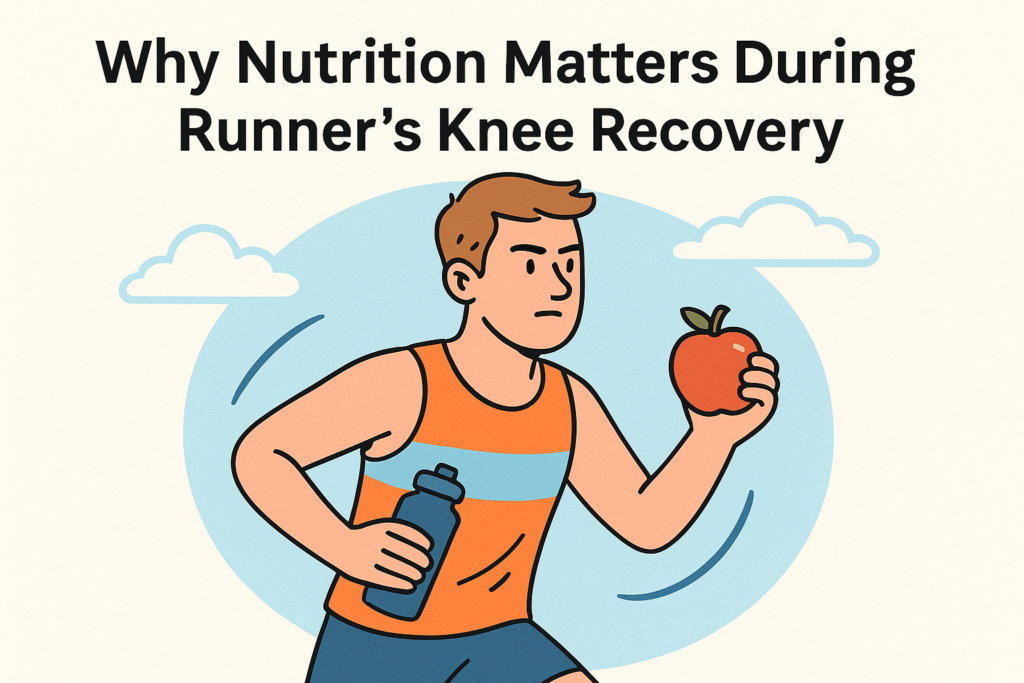
🏃 Why Nutrition Matters During Runner’s Knee Recovery
Although exercise and form are essential, don’t underestimate the power of nutrition. Proper dietary choices can reduce inflammation, support tissue repair, and fuel your rehab workouts.
Recovery-Focused Nutrition Tips:
- Prioritize anti-inflammatory foods like berries, turmeric, leafy greens, and omega-3-rich fish
- Get enough protein to support muscle repair and joint tissue health
- Include carbohydrates to maintain energy levels during rehab sessions
For a full breakdown of what to eat as you recover, read our full guide:
👉 Nutrition for Endurance Runners: Fuel Smarter, Go Longer
How to Prevent Runner’s Knee from Returning
Even after full recovery, prevention should remain a priority. Fortunately, simple habits can significantly lower your risk.
Prevention Tips:
- Increase training volume by no more than 10% per week
- Replace worn-out shoes and consider professional gait analysis
- Incorporate hip and glute strength training into your weekly routine
- Cross-train with cycling or swimming to reduce repetitive impact
- Make adjustments at the first sign of pain, rather than pushing through
By being proactive, you can avoid the frustration of recurring injuries.
When to Seek Medical Help
Despite your best efforts, some cases may require professional evaluation. Therefore, contact a healthcare provider if you experience:
- Persistent pain lasting more than 4–6 weeks
- Inability to bear weight or noticeable instability
- Swelling, heat, or visible deformity
- A prior history of knee injuries or systemic joint conditions
A physical therapist or sports physician can assess your condition and guide you with personalized treatment.
🏆 Final Thoughts
In summary, an effective runner’s knee treatment plan requires more than just rest. Instead, it demands consistent rehab, strength training, and smart return-to-run strategies. When combined with proper taping, improved form, and sound nutrition, you’ll not only heal—you’ll become a more resilient runner.
Ultimately, knee pain from running is a signal—not a sentence. With the right tools, education, and persistence, you can return to pain-free miles and reduce your risk of injury in the future.
👟 Ready to take the next step? A coach can help you implement these strategies with expert guidance, accountability, and personalized support. Working with a coach like Coach T means you’re never running alone—mentally or physically.
🎁 Limited Offer: Claim your free 1-month custom running plan today. Spots are limited, so don’t wait: Get Your Free Plan Here
📚 References
- Evidence Based Treatment Options for Common Knee Injuries in Runners
- This research review from the National Institutes of Health (NIH) covers conservative treatment methods for patellofemoral pain syndrome (PFPS), including strengthening, manual therapy, neuromuscular re-education, and modalities for best outcomes.
Read the full article
- This research review from the National Institutes of Health (NIH) covers conservative treatment methods for patellofemoral pain syndrome (PFPS), including strengthening, manual therapy, neuromuscular re-education, and modalities for best outcomes.
- Overview: Patellofemoral Pain Syndrome (Runner’s Knee) – National Center for Biotechnology Information
- An authoritative overview discussing acute pain management strategies, the effectiveness of strengthening exercises, and long-term recovery advice for runner’s knee:
Read the overview
- An authoritative overview discussing acute pain management strategies, the effectiveness of strengthening exercises, and long-term recovery advice for runner’s knee:
- Strategies to Prevent and Manage Running-Related Knee Injuries – British Journal of Sports Medicine
- Systematic review and meta-analysis showing the recent evidence for running technique retraining, exercise therapy, orthoses, and other interventions for knee pain in runners:
View the research paper
- Systematic review and meta-analysis showing the recent evidence for running technique retraining, exercise therapy, orthoses, and other interventions for knee pain in runners:
- Runner’s Knee Exercises: Treating Patellofemoral Syndrome – Healthline
- A practical evidence-based guide to the best exercises for runner’s knee, including quadriceps and hip strengthening, flexibility drills, and recovery safety tips:
Check out the exercises
- A practical evidence-based guide to the best exercises for runner’s knee, including quadriceps and hip strengthening, flexibility drills, and recovery safety tips:
- Evidence Based Conservative Management of Patellofemoral Pain Syndrome – NIH
- This review summarizes conservative management options like exercise therapy, taping, bracing, and pain medications, with evidence findings for each intervention:
Full review article
- This review summarizes conservative management options like exercise therapy, taping, bracing, and pain medications, with evidence findings for each intervention:
**Please note that the information shared in this article reflects my personal knowledge and experiences. It is not intended as professional advice and should not be relied upon as such. Always consult with a qualified expert or professional before making any decisions based on the content provided.