


Nobody tells you this when you first start running, but here’s the truth that took me more than a decade—and over 20 marathons—to fully understand:
Your biggest breakthroughs don’t come from your legs… they come from your mind.
✅ Yes, training plans matter.
✅ Yes, mileage builds the engine.
✅ Yes, speed sessions sharpen race pace.
But your mind decides whether you show up consistently, handle discomfort, make smart decisions on race day, and ultimately run to your real potential. Today, as Coach T, I want to show you how mental performance in running can unlock speed, endurance, and breakthroughs you didn’t think possible.
And I won’t just tell you.
I’ll show you—with my own race experiences, simple principles, entertaining athlete examples, and a clear action plan.
Let’s dive in.
Why Mental Performance Matters More Than Physical Training
Most runners believe performance is 80% physical and 20% mental.
In reality?
Running performance is closer to 50/50.
Because although your legs do the work, your mind:
- gets you out the door
- regulates fear
- controls pacing
- shuts down negative thoughts
- handles pressure
- manages discomfort
- dictates effort
- unlocks confidence
- determines your race decisions
This is why two athletes with the same training can have completely different results.
In fact, look back at your own races.
Think about the days you surprised yourself.
Were those days because your VO2 max suddenly spiked?
Of course not. They happened because you arrived mentally light, free, and ready to run.
Now let me show you exactly how to create that state on purpose.
Principle #1 — Radical Responsibility
It’s tempting to blame:
- Bad weather
- Work stress
- Poor sleep
- Wrong pacing
- “Not my day”
But here’s the mindset that creates breakthroughs:
Your running is yours to shape. No excuses.
Ownership doesn’t mean beating yourself up. It means power over what you can control—your effort, habits, choices, and attitude. That’s where real improvement comes from.
Eliud Kipchoge meticulously manages sleep, nutrition, and training. Every detail is intentional. His mental ownership is what sets him apart.
Every evening, ask: “What one action tomorrow will make future me proud?” Small consistent actions compound into huge performance gains.
Principle 2 — Control Your Thoughts, Control Your Pace
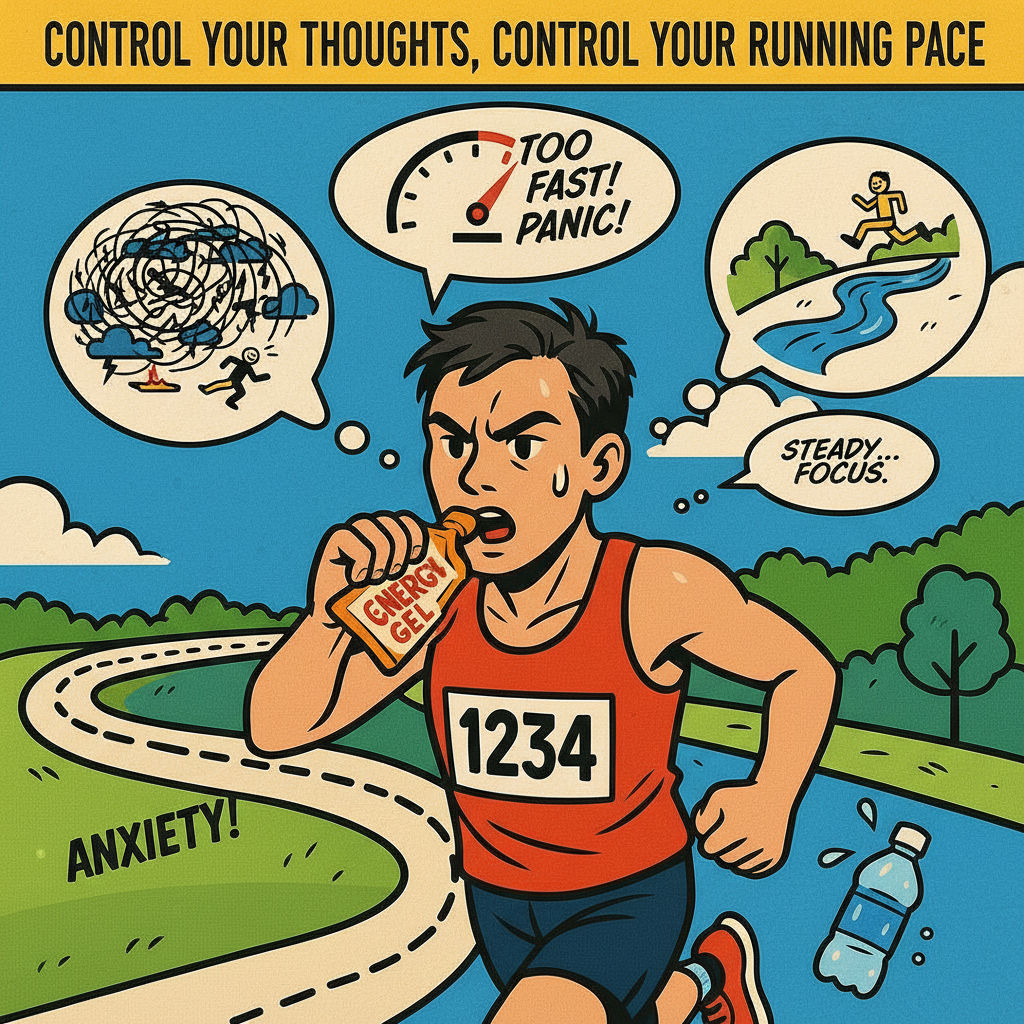
Your mind decides how “hard” a pace feels. When you feel calm, your effort feels lighter. When you feel stressed, the same pace feels unbearable.
Kipchoge smiles mid-marathon—not because it feels easy, but because it lowers perceived effort. Your brain responds.
During workouts or races, replace: “I can’t hold this pace” with “Relax and find rhythm.”
Smiling in the last 3 km? It works surprisingly well.

Principle 3 — Purpose Fuels Performance
Running without purpose is like driving with no destination. With purpose, every run has meaning. Mo Farah connected his running to personal mission: family, legacy, identity. Suddenly, discipline and focus became effortless.
Answer these questions:
- Why do I run?
- What does running give me that nothing else does?
- Who am I running for when it gets hard?
Write your purpose somewhere visible.
Principle 4 — Embrace Discomfort
Pain is part of running. The secret isn’t avoiding it—it’s learning to lean into it. During the 2018 Boston Marathon, Desiree (“Des”) Linden faced some of the worst weather in race history — steady rain, freezing temperatures, and brutal headwinds. Early on, she admitted she was doubting herself: “No way, this is not my day.” But instead of giving in, she leaned into the challenge. She embraced the conditions, adjusted her racing mindset, and kept moving forward. In the end, she pulled away late in the race for a powerful win in 2:39:54 — becoming the first American woman to win Boston since 1985.
When things get brutal, don’t resist. Accept the difficulty, breathe steadily, and trust that your persistence will pay off.
Principle 5 — Honest Self-Talk
Most runners either criticize themselves harshly or make excuses. The mental breakthrough? Tell yourself the truth kindly.
Courtney Dauwalter asks mid-ultra: “Can I go faster now?” No drama, just fact. Mental clarity guides physical performance.
During your next run, ask: “What’s the smartest next step I can take?”
Principle 6 — Run Without Expectations
Expectation-free running is powerful. It relaxes the body and allows peak performance naturally. When you take away expectations, your true ability finally comes through.
After taking three months off for shoulder surgery, I had minimal training leading into the Firenze Marathon 2024. Honestly, I went into the race with zero expectations, just wanting to enjoy the run. But something amazing happened: without stressing about pace or effort, my legs remembered what to do, and I ended up matching my personal best—effortlessly. It was a powerful reminder that sometimes letting go and trusting your body can produce the best results.
Riga Marathon 2025 came after a challenging few months: I had pneumonia, which kept me completely off training for more than a month. I went into the marathon with no expectations, not even a target pace. The surprising twist? After the race, a CT scan revealed my pneumonia hadn’t fully cleared. Yet somehow, without forcing anything, my body responded beautifully, and I finished with a new personal best—five minutes faster than before. This experience hammered home one truth: sometimes, relaxing, trusting your body, and letting go of expectations allows your mind and body to perform miracles.
For more details on the Riga Marathon itself, including the course, conditions, and race tips, check out our full guide here
Yuki Kawauchi’s Boston Marathon win came from running without pressure. Freedom beats stress every time.
Principle 7 — Master Your Inner Voice
Your brain has two roles:
- Protector → tells you to stop
- Visionary → tells you to push
When you run, your brain talks to you constantly. One voice wants you to slow down, quit, or take it easy. The other voice reminds you that you can keep going, push a little harder, and stick to your plan.
The key to mental performance is learning which voice to listen to at the right moment. You don’t ignore the first one—it’s trying to protect you—but you also give attention to the second one, which helps you perform at your best.
Elite performance is learning to choose the visionary voice without ignoring the protector.
Kilian Jornet, a top mountain runner, listens to both voices. When his body feels tired, he slows slightly, but when his mind says he can push, he takes smart risks and keeps moving efficiently. That balance is why he dominates ultra races.
During your next long run or race, notice the thoughts telling you to stop. Acknowledge them, but choose the thought that keeps you moving forward. Even small choices like this add up to big improvements.
Principle 8 — Daily Choices Create Consistency
Your best runs don’t happen because of one big workout—they happen because of small, smart choices every day. It’s showing up for that short run, sticking to recovery, eating well, and doing the little things consistently.
Meb Keflezighi rarely skipped workouts or overtrained. By making small, consistent choices every day, he built legendary endurance and reliability.
Focus on one intentional action per day that moves you closer to your running goals. Over time, these small choices add up to huge gains.
Principle 9 — Predictable Routines Reduce Stress
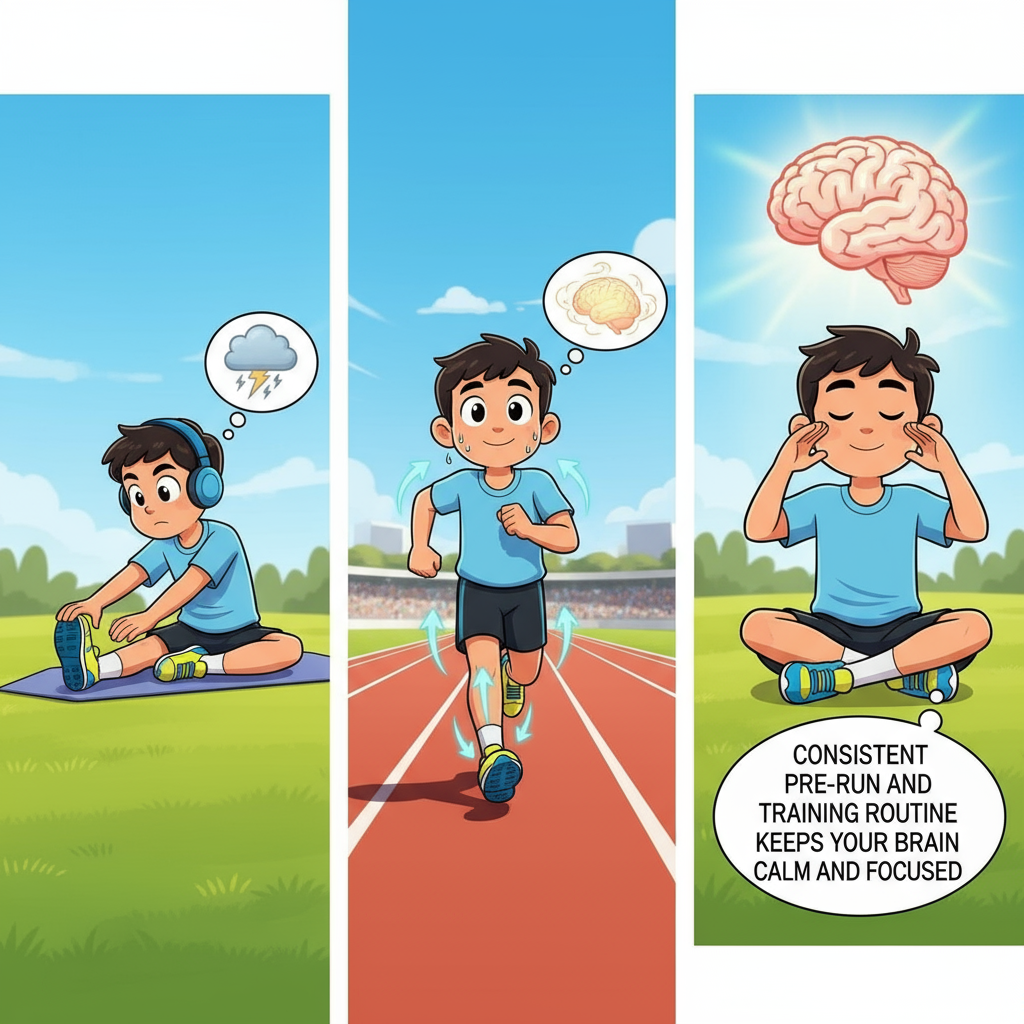
Running is hard enough—don’t make your mind work harder than it needs to. A consistent pre-run and training routine keeps your brain calm and focused.
A runner might wake up at the same time each day, have a simple breakfast, do a 10-minute warm-up, and follow the same stretching routine after their run. This simple, predictable pattern helps you start each run calm, stay focused, and run more efficiently, without wasting mental energy deciding what to do next.
Create a simple pre-run ritual: same breakfast, warm-up, or playlist. The more predictable your routine, the more mental energy you can use to run smart and stay confident.
Principle 10 — Patience Wins
Runners often want results yesterday. We all dream of instant PBs or immediate fitness gains. But real improvement takes time. Patience doesn’t mean doing nothing—it means trusting your training plan, your coach, and your body, and letting fitness grow steadily.
Here’s the truth: doubts are dangerous. When you second-guess a training plan, skip sessions “just in case,” or overtrain trying to compensate, your results often fall short of what could have been. Ironically, sticking to a well-designed plan—even if it feels “easy” or slower than you’d like—almost always produces better long-term performance than chasing fast results on your own.
- Trust your coach: They design the program based on your current fitness, recovery, and goals. A single “easy day” may feel frustrating, but it prevents fatigue, injury, and burnout.
- Trust the process: Training is like compounding interest. Each run, workout, or recovery day builds on the last. Missing steps or adding extra intensity too soon can undo weeks of progress.
- Avoid doubt spiral: Overthinking or comparing your plan to someone else’s can lead to skipping key sessions or overexerting yourself, which often leads to worse results than following the plan faithfully.
Patrick Sang, coach of Eliud Kipchoge, says: “Endurance is built daily, not in a single workout.” Those small daily improvements compound into major race breakthroughs.
Instead of chasing immediate results, trust your training, be consistent, and stay patient. Your body and mind will reward you with better times when you least expect it.
| Principle | Focus | Benefit |
|---|---|---|
| Ownership | Control what you can | Confidence & consistent progress |
| Thought Control | Positive self-talk | Lower perceived effort |
| Purpose | Why you run | Motivation & alignment |
| Discomfort | Lean in | Builds resilience & endurance |
| Expectation-Free Running | Relaxation | Unlocks natural performance |
| Inner Voice | Listen & choose | Focus & better decisions |
| Daily Choices | Small consistent wins | Long-term breakthroughs |
| Routine | Predictability | Reduces mental stress |
| Patience | Trust your training plan | Compound improvement & peak performance |
How Mental Performance Translates to Physical Gains
When your mind is trained, everything about your running improves. Workouts feel more effective, your pacing in races becomes smoother, recovery is faster, and your confidence grows naturally. Personal bests start to happen almost effortlessly.
Your legs follow what your brain believes is possible. Train your mind first, and your body will deliver the breakthroughs you’ve been chasing.

Specific Marathon Training: Turn Science into Results
If you’ve ever felt stuck — training hard yet plateauing — you’re not alone. Most runners fall into the same trap: they confuse effort with effectiveness.
The good news? Once you understand and apply specific marathon training, everything changes.
- Recover faster
- Race stronger
- Enjoy training more
As Coach T, I’ll help you identify the right stimulus, apply it with purpose, and balance it with recovery — just like Canova’s champions and Stazza’s stable of sub-3 marathoners.
Together, we’ll turn science into results — and results into confidence.
Get Started TodayCoaching Support to Unlock Your Potential
Sometimes, the fastest way to improve is with guidance. I help runners build mental strength, trust their training, and achieve PBs without unnecessary stress or overtraining.
If you want to work with me directly:
- Meet Coach T: https://runningfitness365.com/our-running-coach/
- Book a call + 2 months free coaching:https://runningfitness365.com/tazi-running-coach/
Final Words from Coach T
Stop chasing harder training, new shoes, or more mileage. Your mind is the engine. Train it, guide it, and respect it—your legs will follow, and breakthroughs will happen naturally. Mental strength transforms every run from ordinary to extraordinary.
Trust your training, embrace discomfort, and stay patient. Small, consistent choices—showing up for your runs, following your plan, and staying focused—compound into big performance gains. PBs don’t come from forcing it; they come from smart, steady work paired with the right mindset.
Enjoy the journey. Celebrate each workout, long run, and recovery day. Breakthroughs happen every time you show up focused, trust the process, and run with confidence. Your mind and body will reward you with results beyond what you imagined.
**Please note that the information shared in this article reflects my personal knowledge and experiences. It is not intended as professional advice and should not be relied upon as such. Always consult with a qualified expert or professional before making any decisions based on the content provided.