

You crossed the finish line, the medal is around your neck, and within an hour the same question arrives: when can I run again? A good marathon recovery plan answers that and tells you what to do in the meantime. Most runners get this wrong in one of two directions. Some go straight back out after two days because they feel fine, and some sit on the sofa for a week and lose the fitness they just spent months building.
Not raced yet? Read what to do in the 7 days before a marathon first, then come back here for the days after.

Marathon recovery in 30 seconds
Here is the short version of how I bring my athletes back after a marathon:
- First 24 hours: walk, drink, eat real food and keep moving gently. Do not sit still for the whole day.
- Days 1 to 7: no running. Walk 20 to 40 minutes a day, add light mobility, and sleep as much as you can.
- Weeks 2 to 3: start with short easy runs of 30 minutes and build to 45 and 55 minutes, flat and fully conversational.
- Week 4: easy runs up to 65 minutes and a longer weekend run of 75 to 90 minutes if the legs feel normal.
- Week 5 onward: one quality session a week returns, then you choose your next goal.
The rule behind all of it: your heart and lungs recover in days, but your muscles, tendons and connective tissue need weeks. Feeling good is not the same as being ready. Below is the full week-by-week plan, what to do on the rest days, and the mistakes I see most often.
Marathon recovery plan: week by week
This is the structure I use with the runners I coach. It is a guide, not a contract: if something hurts in a sharp or lingering way, slow down and add days. Every run in the first four weeks is easy, which means you can speak in full sentences.
| Week | Running | Movement and body work | Check before moving on |
|---|---|---|---|
| 1 (days 1 to 7) | None | Daily walk of 20 to 40 minutes, light mobility, optional easy spin or swim from day 4 | Stairs are comfortable, no limping |
| 2 | 2 to 3 easy runs: 30 minutes, then 30 to 40 minutes | Daily walk on non-running days, 5 to 10 minutes of mobility | Legs feel loose within 10 minutes of starting |
| 3 | 3 to 4 easy runs: 45 to 55 minutes, flat | Calf raises and bodyweight squats twice this week | No pain the next morning |
| 4 | 4 runs: 55 to 65 minutes, plus a weekend run of 75 to 90 minutes | Light strength twice a week | Normal energy, normal sleep, normal appetite |
| 5 and after | One quality session a week returns (strides first, then a controlled workout), plus the long run | Keep the daily movement habit | You are looking forward to the session, not dreading it |
Why the first week is no running. After 42 kilometres your muscles and connective tissue have taken a beating even if you feel fine on day two. A week away from running costs you almost nothing in fitness and protects you from the injuries that start in the weeks that follow a marathon, such as calf, Achilles and shin problems.
Why the runs are short at first. The first runs back are for circulation and routine, not for fitness. Thirty minutes tells your body running is coming back without asking it to carry a long run. Keep them truly easy, and if you are unsure what easy feels like, see the easy run pace guide and zone 2 running.
What to do in the strength weeks. From week 3, calf raises, squats and light core work help the legs absorb the load of running again. Strength training for runners covers the exercises I use.
When quality work returns. In my method a runner does one quality session a week plus the long run, not two hard sessions. After a marathon I bring back one session only, from week 5, and I would rather you start it a week late than a week early.
Want someone to plan your recovery and your next block?
Coming back from a marathon is easier with someone who listens and adjusts the plan around your life, your work and your family. Book a free 20-minute call, or start with your first month of coaching free.
What to do on the rest days: active recovery
I am a believer in active recovery. A rest day does not mean sitting still for 24 hours, and that is a long time to sit. It is also why my brand is called Running Fitness 365: the body is built to move every day, and recovery works better with gentle movement than with none.
In the week after a marathon that means:
- A daily walk of 20 to 40 minutes. Easy pace, ideally outdoors. It keeps the legs from stiffening up and clears the heavy feeling.
- Light mobility. Hips, calves and ankles for 5 to 10 minutes. Nothing aggressive, no deep stretching of tired muscle.
- A few push-ups or an easy bodyweight circuit. Short and relaxed, to keep the habit of moving without loading the legs.
- Non-impact cardio from day 4 if you want it. An easy spin on the bike or a swim for 20 to 30 minutes.
Sleep and food after the marathon
Sleep is where most of the repair happens, so protect it for the first two weeks. Aim for an extra 30 to 60 minutes a night if you can, and keep the evenings calm.
Eat properly. Do not start a diet the week after a marathon. Your body is repairing tissue, so include protein at every meal, plenty of carbohydrate to refill your stores, and colourful fruit and vegetables. If the race left you with no appetite, small frequent meals work better than forcing a big one. My marathon fueling guide covers the food side in more detail.
Recovering after a race in hot and humid conditions
If you raced or train in heat, add fluids and salt back through the day, not only straight after the finish, and expect the first easy runs to feel harder than the pace suggests. Run early in the morning, keep the effort by feel rather than by pace, and shorten the run when the weather is worse. Heat adds stress on top of the stress the marathon already put on your body.
The mistakes I see most often after a marathon
- Running again after two or three days because you feel fine. Feeling fine is a heart and lungs verdict. Your tendons are still catching up.
- Signing up for the next race right away. Choose the next goal after week 3, not in the finish area. When you are ready, how to race your best marathon and the marathon training plan guide are the places to start.
- Doing nothing at all for two weeks. Total rest feels good and then makes the restart harder. Walk every day.
- Testing your fitness in the first runs back. Easy means easy. Leave the watch pace alone.
- Jumping straight to hard sessions in week 2. One quality session from week 5 is enough, and it should feel controlled.
What comes after the recovery?
After the marathon, what is next? Whether it is a faster marathon, a half or your first 10K, I build the plan, listen, and adjust it as life happens, so it becomes more than a plan. Coaching starts with your first month free, then €79 a month or €599 a year (less than €50 a month), cancel anytime.
Not ready for a full plan yet? Get my free running plans
If your next goal is a few months away, the free 12-week plans are a good place to start. Enter your email and I will send both straight to your inbox.
Marathon recovery FAQ
How long should I rest after a marathon?
No running for the first 7 days, with a daily easy walk. Most runners are ready for short easy runs in week 2 and for normal training around week 4 or 5.
How long does it take to fully recover from a marathon?
Most runners feel normal within a week, but muscles, tendons and connective tissue need around 3 to 4 weeks, and some runners need longer after a very hard race or a first marathon. Feeling good is not the same as being ready for hard training.
Is it OK to walk the day after a marathon?
Yes, and it is one of the best things you can do. A 20 to 40 minute easy walk reduces stiffness and gets the blood moving. Sitting still all day tends to make the legs feel worse.
When can I do my first hard workout after a marathon?
From week 5 if the legs feel normal. Start with strides, then one controlled session a week. Hard work in the first three weeks raises the injury risk without adding fitness.
Should I take an ice bath or use compression after the race?
They are optional comforts, not recovery essentials. Sleep, food, fluids and easy movement matter far more. If a cold shower or compression socks make you feel better, use them.
Can I run another marathon soon after the first?
The usual advice is to leave at least a few months between marathons, and longer if the race went badly or you picked up an injury. Give yourself 3 to 4 weeks of recovery before you start building towards the next one.

Anna
“I started with zero running experience. Zero confidence. Zero strength.
With Tassos’ coaching, everything changed. Step by step, smart training, strength work, balance and injury prevention built me up from nothing.
The result? I didn’t just finish one… I completed two consecutive Athens Authentic Marathons — healthy, strong, and smiling at the finish line.
The second marathon? We decided just 3 months before race day — and still nailed it.
No injuries. No burnout. Just smart preparation and belief.”
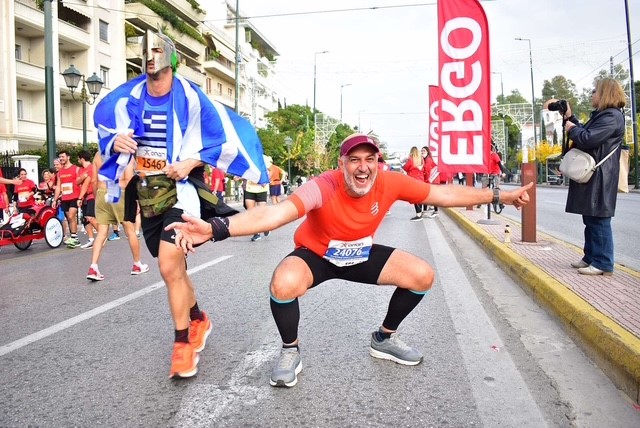
Demetris
“From plateau to breakthrough — exactly what I needed.”
Coach T isn’t just a running coach. He invests time. Real time. Checks in. Adjusts. Cares.
One year ago, I was completely stuck — no progress, just plateau. Through smart, structured training and constant guidance, everything changed.
Step by step, I became stronger, more consistent, and confident — leading to a new Marathon PB at Paris Marathon 2026.
Healthy. Strong. Injury-free.
Keep reading
- What to Do 7 Days Before a Marathon (PB Guide)
- Hold Back to Fly Home: How to Race Your Best Marathon
- Marathon Training Plan: How to Build One That Works (12 vs 16 Weeks)
- Zone 2 Running for Marathon Training: The Complete Guide
**Please note that the information shared in this article reflects my personal knowledge and experiences. It is not intended as professional advice and should not be relied upon as such. Always consult with a qualified expert or professional before making any decisions based on the content provided