


Running your first marathon is as much a mental challenge as it is a physical one. Many first-time marathoners fear the dreaded “wall”—that sudden, overwhelming fatigue that can derail even the best-prepared athlete. The good news? With the right mental preparation for long-distance running, you can significantly improve your odds of running a marathon without hitting the wall.
🧠 Understanding Nutrition for Endurance Runners
Endurance running demands a nutrition strategy that powers hours of activity, promotes rapid recovery, and supports overall health. The balance of carbohydrates, protein, fats, fluids, and micronutrients directly impacts training performance, recovery, and your ability to stay injury-free.
Key Principles:
- Carbohydrates are the main energy source during moderate to high-intensity exercise.
- Protein repairs muscles and supports immune function.
- Healthy fats sustain low-to-moderate intensity efforts and hormone balance.
- Hydration and electrolytes prevent fatigue and optimize muscle function.
Properly fuelling your training isn’t just about what you eat—it’s about when and how.
Best Carbs for Long Distance Runners
Carbohydrates are your primary fuel as a distance runner. The right carbs:
- Maintain blood glucose during long runs
- Promote recovery by refilling muscle glycogen
Best Choices:
- Complex Carbs: Wholegrain bread, oats, quinoa, brown rice — ideal for meals further from your run.
- Simple Carbs: Fruit, honey, sports drinks — great immediately before, during, or after runs.
🍝Daily Carbohydrate Needs:
| Training Load | Carbs (g/kg body weight) |
|---|---|
| Light training | 3–5 |
| Moderate training | 5–7 |
| Heavy training | 7–10 |
| Competition phase | 8–12 |
Tip: Choose low-fibre, low-GI carbs before a race for stable energy and minimal gut distress.
What to Eat Before a Long Run
| When | What to Eat | Notes |
|---|---|---|
| 3-4 hours before | Large meal with complex carbs, moderate protein, low fat & fibre | E.g., pasta with chicken, rice bowl, oatmeal with fruit |
| 1-2 hours before | Small, easily digestible carb-focused snack | E.g., banana with white bread toast, low-fibre cereal |
| 30-60 min before | Optional fast-acting carb snack or sports drink | If you need a quick top-up; avoid heavy/fatty foods |
| Avoid | High-fat, high-fibre foods or anything new just before the event | |
Running Fuel Strategy: Gels, Drinks, or Whole Foods?
For runs >60 minutes, in-session fuelling is key:
- Runs under 60 min: Usually, only water is needed.
- 60-90 min: Optional 15-30g carbs per hour for long sessions or back-to-back days.
- 90+ min: Target 60-90g carbs per hour; combine glucose and fructose sources for best absorption.
Options:
- Sports Drinks: Fast absorption; hydration plus energy.
- Gels/Chews: Portable and concentrated (20-40g carbs/gel).
- Whole Foods: Bananas, dates, or low-fibre energy bars—palatable for long runs but may be harder to digest.
Practice your strategy in training. Never experiment on race day.
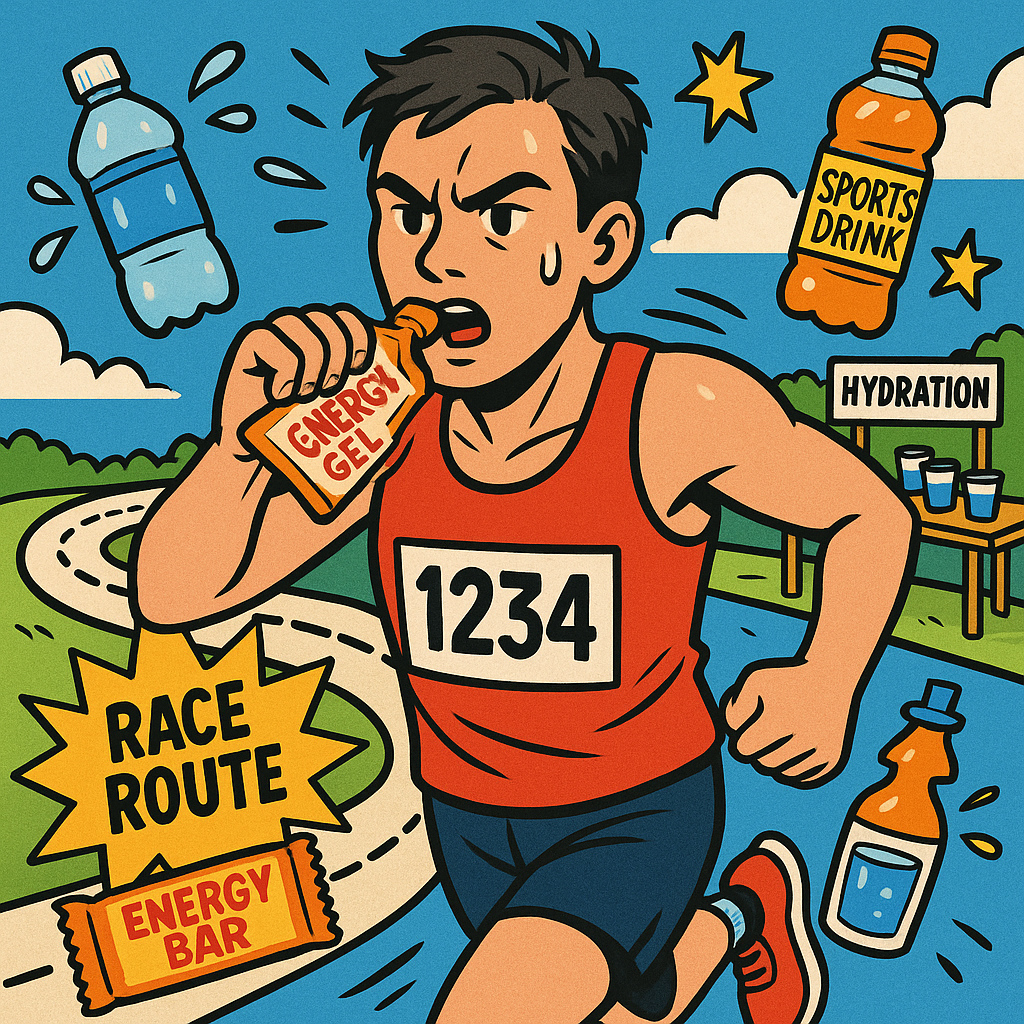
🏃♂️💧 Marathon Hydration Strategy & Electrolytes Explained
Proper hydration sustains performance and prevents cramps, fatigue, and heat illness.
- Daily: 35-40ml fluid/kg body weight.
- During exercise: 500-750ml/hour (adjust by sweat rate and conditions).
- Sodium (the main electrolyte lost in sweat): 200-500mg/hour.
Pre-run: Drink 500-600ml 2-3 hours before; sip 200-300ml 15-20 min before start.
During run: Cool fluids (5-15°C) absorbed best; use sports drinks for >60min sessions.
Post-run: Replace 150% of fluid loss using bodyweight changes as a guide.
Electrolyte sources:
- Sports drinks
- Electrolyte tablets
- Salted foods
🧘 Post-Run Recovery Nutrition: What and When to Eat
| Time After Workout | Nutrient | Amount / Recommendation | Purpose | Great Food Options |
|---|---|---|---|---|
| Immediate (0-30 min) | Carbohydrates | 1.0-1.2 g/kg body weight | Restore glycogen | Chocolate milk, banana with peanut butter, smoothie with whey protein |
| Immediate (0-30 min) | Protein | 20-25 g high-quality protein | Aid muscle repair | Greek yoghurt with fruit, smoothie with whey protein |
| Immediate (0-30 min) | Fluids | Replace 150% of fluid/electrolytes lost | Rehydrate | Chocolate milk, smoothie with whey protein |
| 30-120 min | Continue to eat balanced meals for sustained recovery benefits | |||
Carb Loading for Marathon Performance
| Strategy | Guidance | Example |
|---|---|---|
| Carbohydrate Intake | Increase to 10g per kg body weight per day, starting 3 days before race | ~700g carbs daily (~2800 kcal from carbs) for a 70kg runner |
| Training Volume | Reduce/taper training to allow for maximum glycogen storage | Short, low intensity workouts only |
| Food Choices | Select familiar, well-tolerated, low-fibre carbohydrate sources | White rice, bananas, potatoes, white bread, sports drinks |
| Hydration | Maintain optimal hydration to support carbohydrate storage | Aim for pale urine; consume electrolytes as needed |
| Carb Intake Timing | Spread carb intake evenly across meals and snacks each day | No need for big pasta binges the night before the race |
Female Runner Nutrition: Unique Considerations
| Nutrient / Phase | Key Considerations | Food Sources & Tips |
|---|---|---|
| Iron | Higher needs, especially during menstruation | Include lean meat, lentils, leafy greens; consult a professional about supplementation |
| Calcium & Vitamin D | Essential for bone health and injury prevention | Consume dairy or fortified plant-based alternatives; ensure safe sun exposure |
| Luteal Phase | Increased calorie needs possible | Tune into hunger cues; don’t underfuel during this phase |
| Pregnancy & Breastfeeding | Significant increase in energy and hydration demands | Consult a sports nutritionist or doctor for personalized guidance |
“Eat like an athlete – Matt Fitzgerald“
🏃 How to Avoid Hitting the Wall
“Hitting the wall” = glycogen depletion, leading to sudden fatigue.
Prevention Strategies:
- Carbohydrate-load before key long races.
- Begin fuelling within the first 30-45 minutes of races over 90 minutes.
- Practice your nutrition plan in training to minimize gut upset.
- Don’t skip carbs the night or morning before your run.
Key cue: If you feel hungry or unusually fatigued mid-run, slow down and refuel.

🏆 Final Thoughts: Fuel Well, Perform Better.
By prioritizing personalized, evidence-based nutrition for endurance runners—paying attention to carbohydrates, hydration, timing, and recovery—you can confidently train harder, race smarter, and recover faster.
Take control of your nutrition strategy and make every mile count.
👟 Ready to take the next step? A coach can help you implement these strategies with expert guidance, accountability, and personalized support. Working with a coach like Coach T means you’re never running alone—mentally or physically.
🎁 Limited Offer: Claim your free 1-month custom running plan today. Spots are limited, so don’t wait: Get Your Free Plan Here
**Please note that the information shared in this article reflects my personal knowledge and experiences. It is not intended as professional advice and should not be relied upon as such. Always consult with a qualified expert or professional before making any decisions based on the content provided.