

New York City Marathon is more than a race — it’s a journey through energy, chaos, and heart. From Staten Island’s cold dawn to the roar of Central Park, it challenges runners not just physically, but strategically.
As a coach who’s analyzed this course inside-out, I can tell you this: the NYC Marathon rewards those who respect its rhythm. Below, I’ll guide you through every section of the course — how to run it smart, stay composed, and finish strong.
🗺️ The Character of the Course: Controlled Chaos and Hidden Hills
The NYC Marathon stretches across five boroughs, five bridges, and a thousand cheers per mile. With around 1,000 feet (310 meters) of elevation gain, it’s not a flat course — but it is a fair one.
The key is to run a negative split: 1–2.5% slower in the first half, then unleash your rhythm in the second. That means patience early, confidence mid-race, and courage late.
Staten Island Start: Patience Wins the Day
The race begins on the Verrazano-Narrows Bridge — the steepest hill of the entire marathon. The buzz here is incredible, with helicopters overhead and adrenaline in the air.
Don’t chase the adrenaline. Let the hill warm you up — your race doesn’t start until Brooklyn.
Run easy uphill, then control yourself on the downhill. The first two miles are all about rhythm, not speed.

Specific Marathon Training: Turn Science into Results
If you’ve ever felt stuck — training hard yet plateauing — you’re not alone. Most runners fall into the same trap: they confuse effort with effectiveness.
The good news? Once you understand and apply specific marathon training, everything changes.
- Recover faster
- Race stronger
- Enjoy training more
As Coach T, I’ll help you identify the right stimulus, apply it with purpose, and balance it with recovery — just like Canova’s champions and Stazza’s stable of sub-3 marathoners.
Together, we’ll turn science into results — and results into confidence.
Get Started TodayBrooklyn: Find Your Rhythm
Once you hit Brooklyn, the course opens up and the energy is electric. Flat, wide, and packed with cheering crowds, it’s the perfect place to settle into your marathon pace.
The temptation? Going too fast. The music, the signs, the shouts of “Go runner!” — it’s easy to forget your plan.
If you feel effortless at mile 10, you’re perfect. If you already feel “good tired,” you’ve gone too hard.
Queens and the Queensboro Bridge: The Silent Test
At halfway, you reach Queens, and the noise fades. Then comes the Queensboro Bridge — long, steep, and eerily quiet. No spectators. No music. Just the sound of your breath and footsteps.
This is where the race turns from excitement to execution.
Stay patient and shorten your stride. Ignore the watch — GPS often drops here. Focus on effort, not numbers.
Get over this bridge feeling controlled, and Manhattan will feel like rebirth.
Manhattan: The Roar of First Avenue
Coming off the bridge into Manhattan’s First Avenue is like entering a stadium of sound. It’s fast, flat, and utterly electric.
Runners often make their biggest mistake here — pushing too hard, too soon.
Let the energy lift your stride, not your pace. Cruise with confidence — you’ll need that fuel later.
This is the moment to stay smooth, efficient, and emotionally steady.

The Bronx: The Reality Check
By mile 20, fatigue sets in and you enter the Bronx — short, gritty, and full of turns. It’s not the distance that hurts, it’s the timing.
The Bronx is your mental checkpoint. Get in, stay composed, and get back to Manhattan with purpose.
Treat this section as a bridge — not the wall, but the gateway to your finish.
Fifth Avenue and Central Park: The Final Battle
Re-entering Manhattan, you face the quiet climb up Fifth Avenue — around mile 23. It doesn’t look steep, but at this stage, it’s brutal.
Those who paced well start passing dozens here. Those who didn’t… well, they learn why patience matters.
When you crest that hill and turn into Central Park, the magic returns — fall colors, skyscrapers, roaring crowds. The end is near.
Now it’s mindset. Think, “How many runners can I pass?” That’s how you finish strong in Central Park.
Run by feel. Use the crowd. Believe.
Fueling and Hydration Strategy
- Hydration stations: Every mile from 3–25 (except 5, 7, 9).Gels: Official stations around miles 12 and 18 — bring your own.Breakfast: Eat twice — early pre-departure, then a small snack near start time.Cold start tip: Layer up with throwaway clothes or a garbage bag poncho to stay warm pre-race.
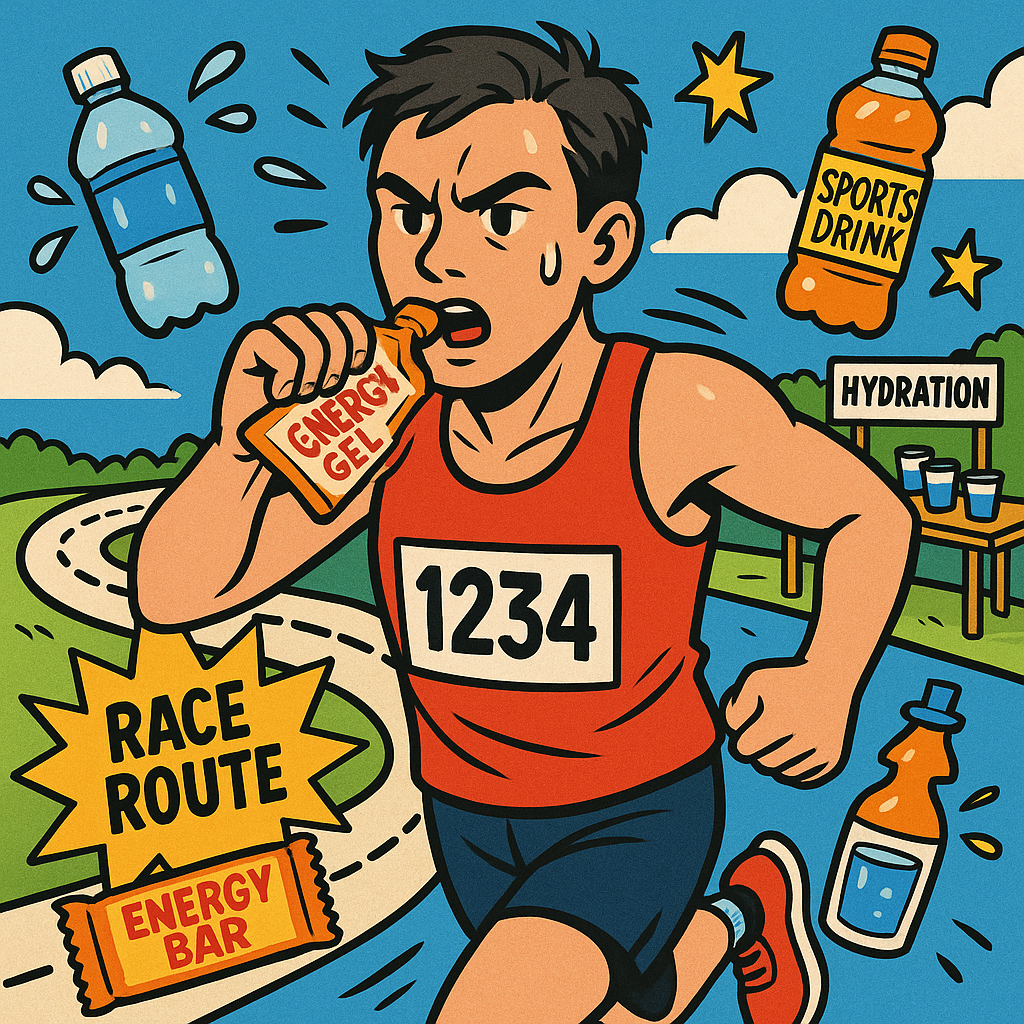

Fuel early, finish strong. A well-fed brain makes smart pacing decisions.
In the final push of the New York City Marathon, it’s not just your legs doing the work — your fuel and fluids determine how you finish. Aim for roughly 60-90 g of carbs per hour, time your gels and hydration early (starting around mile 1-2) and bring exactly what you’ve trained with. Practice your system in training so it becomes automatic.
For a detailed, science-backed breakdown of marathon fueling and hydration — including timing, electrolytes and recovery — check out my full guide here: Marathon Fueling Guide 2025
🧩 Mindset: Five Boroughs, Five Phases
Think of the marathon in five emotional chapters:
- Staten Island – Patience and composure
- Brooklyn – Flow and joy
- Queens – Focus and control
- Manhattan – Rhythm and energy
- Bronx → Central Park – Grit and glory
Your body runs the distance — your mind wins the race
📊 Mile-by-Mile Strategy
| Mile(s) | Section | Key Features | What to Be Careful Of |
|---|---|---|---|
| 0–3 | Staten Island → Verrazano-Narrows Bridge | Steep uphill start, dramatic skyline views | Don’t chase adrenaline. Start controlled and ease into rhythm. |
| 3–10 | Brooklyn | Flat, festive, massive crowds | Stick to pace. Easy to get swept up in excitement. |
| 10–15 | Queens → Queensboro Bridge | Long quiet climb, mental reset zone | Stay patient. Ignore GPS and maintain effort, not pace. |
| 15–20 | Manhattan — First Avenue | Fast, flat, and loud | Don’t surge. Use crowd energy to stay relaxed. |
| 20–21.5 | The Bronx | Short, winding, mentally tough | Hold your form. Focus on calm, efficient rhythm. |
| 21.5–23 | Fifth Avenue | Gradual, punishing climb | Save energy. Lean forward and flow, don’t force it. |
| 23–26.2 | Central Park Finish | Rolling hills, roaring crowds | Run by feel. Pass runners, feed off the atmosphere. |
Final 5K: The Art of the Finish
By now, your legs are burning, but the city carries you. Central Park’s rolling terrain can chew you up — unless you’ve saved energy. Each turn reveals another crowd, another hill, another chance to dig deep.
Forget pace here. Run by feel. Run with heart.
When you see the signs for Columbus Circle and hear the finish-line roar, you’ll know you’ve earned it — every climb, every bridge, every early morning.
Coach T’s Tip: Finishing strong isn’t about speed — it’s about belief. Train for patience, and the final miles will be yours.
Key Takeaways for NYC Marathon Success
✅ Run a negative split — patience early, power late.
✅ Respect the bridges — Verrazano and Queensboro decide your race.
✅ Use the crowd energy, don’t let it control you.
✅ Fuel early and layer for the cold.
✅ Save your legs for Fifth Avenue and Central Park.
Final Words from Coach T
The New York City Marathon isn’t a race you dominate — it’s a race you partner with. Every bridge, every borough, every voice along the way is part of the experience.
If you pace with patience, fuel with precision, and embrace the rhythm of the city, you’ll cross that Central Park finish line with power left in your stride and pride in your heart.
Run it smart. Run it brave.
And when you turn onto Fifth Avenue, remember — this is what you trained for.
**Please note that the information shared in this article reflects my personal knowledge and experiences. It is not intended as professional advice and should not be relied upon as such. Always consult with a qualified expert or professional before making any decisions based on the content provided.