


if you have been training consistently, increasing your mileage, and pushing your sessions, but your marathon time is not improving, then you are likely missing something fundamental. It is not a lack of effort. It is not a lack of discipline. In most cases, the issue comes from training without understanding what your body actually needs.
This is where most runners get stuck. They run more, they try harder sessions, and they expect a different result. However, endurance performance does not improve just from doing more. It improves when you apply the right stimulus to your current limitation. That is exactly where understanding your lactate threshold pace becomes a turning point.

I saw this very clearly with two athletes who came to me at the same time. Andreas and Demetris were coming from completely different training backgrounds. One was focused on steady running and consistency, while the other had been doing more intense sessions and faster work. Despite these differences, both had reached the same frustrating point. Their marathon results were not improving.
Instead of changing their training immediately, I needed to understand their engine first. That is always the starting point.
What Is Lactate Threshold Pace?
Your lactate threshold pace, often referred to as LT2, is the fastest pace you can sustain before fatigue starts to increase rapidly. It is the point where your body is just balancing effort and control. You are working hard, but you are still holding the pace without breaking down.
A simple way to understand it is this:
- 👉 It is the pace you could hold for around one hour
- 👉 It feels controlled but challenging
- 👉 If you go faster, fatigue builds very quickly
This is the key concept you must remember:
- 👉 VO2max is your ceiling
- 👉 Lactate threshold is what you can sustain
Many runners train hard, but few understand this difference. Once you do, your training becomes much more precise.
The Turning Point: Testing Instead of Guessing
When Andreas and Demetris came to me, both were trying to fix their plateau by doing more of what they already believed in. Andreas wanted more mileage. Demetris wanted more intensity. However, neither approach addressed the real problem.
So instead of guessing, we tested.
The goal was simple. Understand their physiology first, then adjust training.
🏃♂️ Talk to Coach T Today -1 Month Free TrainingThe LT2 Test (30-Minute Protocol)
This is the test that every runner can perform. It is simple, repeatable, and very effective.
How to perform the test:
- 🏃 Warm up for 15–20 minutes at an easy pace
- ⚡ Run 30 minutes at the hardest effort you can sustain
- Do not start too fast, build into the effort
- 📈🏃Take the average pace of the final 20 minutes
That pace is your lactate threshold pace (LT2)📈🏃
Key execution cues:
- ❤️🏃 You should feel in control, not sprinting
- 😤🏃 Breathing is heavy but steady
- ⚖️🏃♂️ You should not collapse in the last 5 minutes
This is not a race. It is a controlled hard effort. ⚖️🏃♂️
The 5-Minute Test (Your Ceiling)
To complete the picture, you need a second test.
How to perform:
- 🏃 Warm up properly
- ⚡ Run 5 minutes at maximum effort
- 📈🏃 Record your average pace
This gives you your top-end speed (VO2max effort) 📈🏃
Why You Need Both Tests
Most runners only test one number. That is not enough.
You need to compare:
- What you can sustain (LT2)
- What you are capable of (5-minute max)
The gap between these two tells you exactly what you are missing.
Andreas: Strong but Limited
Andreas completed both tests and his results were:
- LT2: 4:29/km
- 5-minute effort: 4:13/km
At first glance, these numbers looked consistent and strong. However, when I looked at the gap between them, the issue became very clear.
The difference was small.
This meant that Andreas had built a solid aerobic base but lacked higher-end capacity. He could sustain effort well, but he did not have enough extra speed above that level.
In practical terms, he was starting his marathon too close to his limit. That is why fatigue would build in the later stages of the race.
| Zone | Pace | Coach Guidance |
|---|---|---|
| Easy | 5:20 – 5:50/km | This is where you build durability. Keep it relaxed, conversational, and let the body absorb the work. |
| Steady | 4:50 – 5:05/km | Controlled pressure. You are working, but never forcing—this builds strength without draining you. |
| Marathon | 4:45 – 4:55/km | This is your race rhythm. Stay smooth, efficient, and locked into form—not chasing pace. |
| Threshold | 4:25 – 4:30/km | Controlled discomfort. You should feel challenged but in control—this is where your engine grows. |
| VO2max | 3:50 – 4:05/km | High intensity, sharp work. Short, focused efforts to raise your ceiling—quality over quantity. |
Andreas – Key weekly sessions For the next 6-8 weeks until reevaluation:
- VO2max intervals
→ 5 × 1 km @ ~3:55/km (2 min recovery) - Short faster reps
→ 10–12 × 400 m @ ~3:40/km - Threshold maintenance
→ 20–25 minutes @ LT2 pace - Long run structure
→ Easy + steady + easy blocks
For Andreas, the focus was clear. He needed to build speed above his threshold so that marathon pace would feel easier and less restrictive.
Demetris: Fast but Unstable
Demetris had very different results:
- LT2: 4:32/km
- 5-minute effort: 3:55/km
Here, the gap was large.
This told me that he had strong speed but lacked the ability to sustain it. His problem was not his ceiling. It was his control.
In races, he would start comfortably, often too fast without realising it, and then fade as fatigue built up.
| Zone | Pace | Coach Guidance |
|---|---|---|
| Easy | 5:30 – 6:00/km | Stay relaxed and patient. This is your foundation—build volume without stress. |
| Steady | 5:00 – 5:15/km | Controlled effort. You’re working, but always within yourself—developing strength. |
| Marathon | 4:50 – 5:00/km | Practice race rhythm. Smooth, efficient running—never forced. |
| Threshold | 4:30 – 4:35/km | Comfortably hard. Stay controlled while pushing your limits—this builds your engine. |
| VO2max | 4:00 – 4:10/km | Short, sharp efforts. Focus on quality and pace precision to raise your ceiling. |
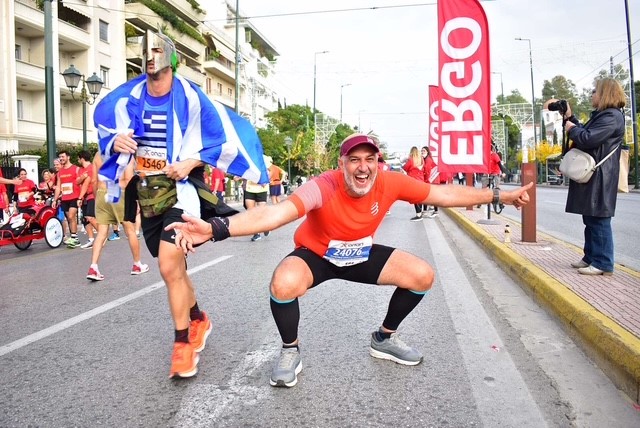
“From plateau to breakthrough — exactly what I needed.”
Coach T isn’t just a running coach.
He invests time. Real time.
Checks in. Adjusts. Cares.
One year ago, I was completely stuck — no progress, just plateau.
Through smart, structured training and constant guidance,
everything changed.
Step by step, I became stronger, more consistent, and confident —
leading to a new Marathon PB at Paris Marathon 2026.
Healthy. Strong. Injury-free.
— Demetris
Demetris – Key weekly sessions:
- Threshold intervals
→ 2 × 20 min @ LT2 - Tempo runs
→ 35–45 minutes controlled build - Marathon pace sessions
→ 12–18 km steady at MP - VO2 maintenance
→ 5–6 × 800 m controlled
For Demetris, the focus was the opposite of Andreas. He needed to improve his ability to sustain effort rather than push it.
Simple Self-Assessment Guide
You can now assess your own profile using the results from both tests. The relationship between your lactate threshold pace and your 5-minute effort gives you a clear direction for your training.
A simple way to interpret your results is the following:
- If your gap is small (10–20 sec/km), your ceiling is limited and you need more VO2max and speed development
- If your gap is large (30+ sec/km), your endurance is limiting you and you need more threshold and sustained aerobic work
This comparison allows you to stop guessing and start targeting the exact system that is holding you back.
However, before you go and perform these tests, it is important to approach them with the right mindset and preparation. These are not casual runs. They are structured efforts that place real stress on your body, especially the 5-minute test, which is very close to maximum effort.
How to Use This Article as Your Manual
If you come back to this article later, follow this process:
- Perform the 30-minute LT2 test
- Perform the 5-minute max test
- Compare the gap
- Set your zones
- Adjust your training focus
Repeat the tests every 6–8 weeks and track your progress.
🏃♂️ Talk to Coach T Today -1 Month Free Training
Important Safety and Preparation Considerations
Before performing any of these tests, you need to respect the demands they place on your body. Many runners underestimate this, and that is where injuries and setbacks happen.
Make sure you follow these basic principles:
👉 Always complete a proper warm-up
Spend at least 15–20 minutes building gradually from easy running into a slightly faster rhythm. Include a few short strides before starting the effort. Never go straight into the test cold.
👉 Be especially cautious with the 5-minute test
This is a maximal effort. If you go too aggressive too early or attempt it without preparation, you increase the risk of muscle strain, particularly in the calves and hamstrings.
👉 Fuel your body properly
Do not attempt these tests in a depleted state. Make sure you have consumed sufficient carbohydrates beforehand so your body can produce the required effort safely and effectively.
👉 Be aware of your current condition
If you are fatigued, recently ill, or carrying any injury, delay the test. Data is only useful if it comes from a healthy and stable state.
👉 Listen to your body during the effort
Discomfort is expected, but sharp pain or unusual tightness is not. If something does not feel right, stop the test rather than pushing through.
Use This as Your Reference Point
Once you have completed both tests safely and correctly, you now have a baseline you can trust. This is what turns your training from random effort into structured development.
Come back to this process every 6–8 weeks, repeat the tests, and monitor how your gap evolves. Over time, your training should not just feel better, it should become more controlled, more predictable, and more effective.
That is when you know you are no longer guessing.
That is when you start training like an athlete.
Final Thoughts
Andreas improved when he built his ceiling. Demetris improved when he learned to control his effort. Both were working hard before, but only improved once they understood what they were missing.
That is the difference between training hard and training correctly.
If you want help structuring your pacing, you can use my Marathon Pace Planner. You can also refine your fuelling strategy
If you feel stuck and want proper guidance, you can find more about my coaching 👉 here
“– Coach T, NASM-CPT
Please note that the information shared in this article reflects my personal knowledge and experiences. It is not intended as professional advice and should not be relied upon as such. Always consult with a qualified expert or professional before making any decisions based on the content provided