



If you’ve ever watched a marathon finish line and thought, “I could never do that,” I want you to pause right there. Every marathon runner you admire started in the same place: as a beginner. The difference isn’t some magical talent. Instead, it’s simply the process they followed. When you build up the right way, running becomes something your body adapts to naturally, and marathon goals stop feeling impossible.
As Coach T, I’ve worked with runners who began with short jogs, nervous about injuries, unsure if they were even “real runners.” However, with the right structure, they not only stayed healthy, but they also developed into confident endurance athletes. So in this article, I’m going to show you exactly how to go from beginner runner to marathoner safely, smoothly, and without falling into the common traps that cause breakdowns.

Why Most Beginner Runners Get Injured (And How You Avoid It)
One of the biggest mistakes new runners make is assuming that motivation alone is enough. You feel excited, so you run more. You feel fitter, so you run faster. Unfortunately, the body doesn’t adapt evenly. Your heart and lungs improve quickly, but your tendons, joints, and connective tissues take much longer. That’s why so many runners feel amazing in week three… and then feel pain in week six.
Instead of rushing, the smartest runners focus on gradual progression. In other words, we build durability first. When you respect the process, you don’t just avoid injuries — you actually improve faster over the long term, because you stay consistent.

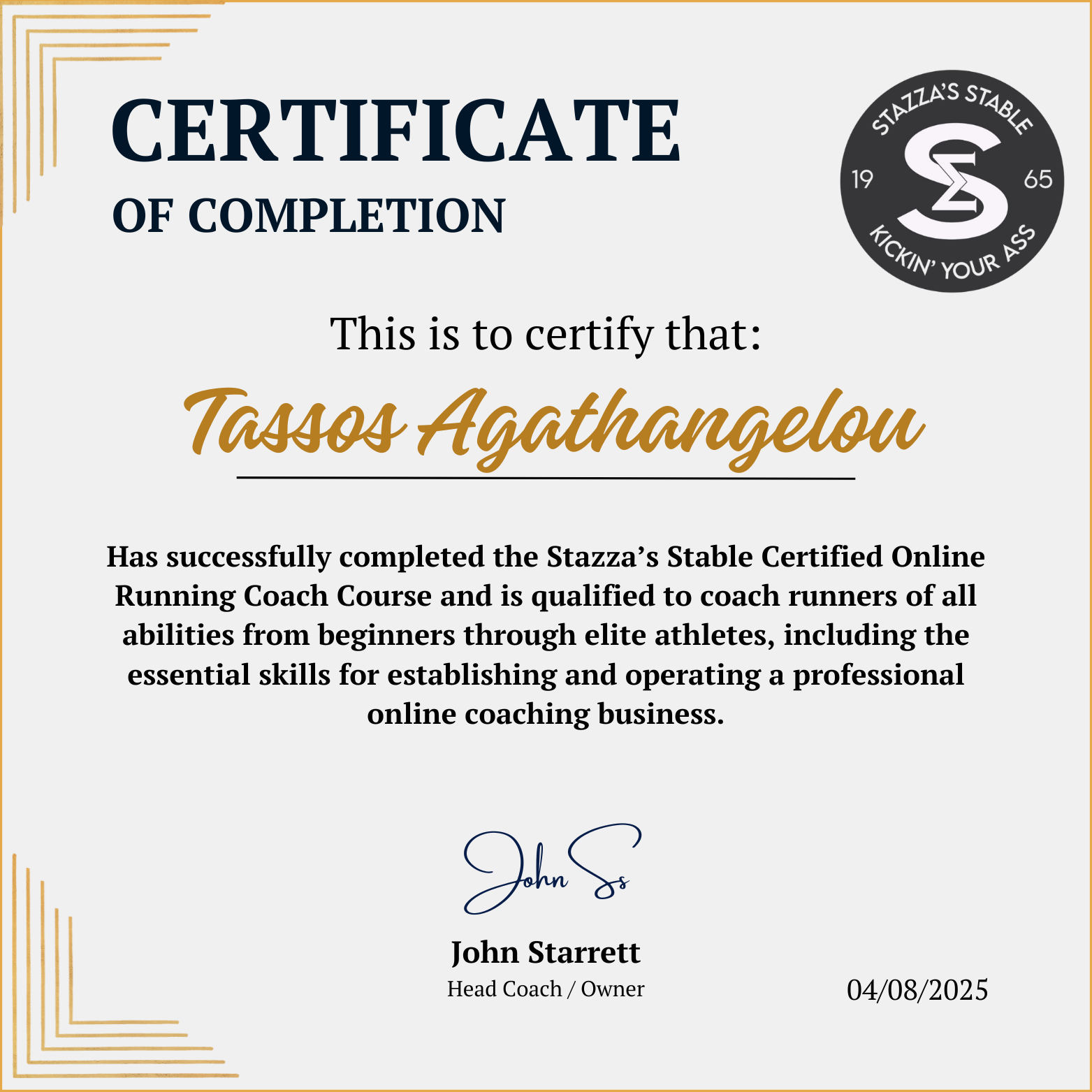

Marathon Coaching: Train Strong, Stay Injury-Free
Training for a marathon isn’t just about doing more miles — it’s about doing the right work at the right time, without breaking down.
As Coach T, I help runners train smarter, stay consistent, and build the strength and structure needed to run strong and injury-free.
- Train safely with purpose
- Reduce injury risk and fatigue
- Build long-term marathon fitness
Whether you’re chasing a PB or simply want to enjoy running without setbacks, I’ll guide your training with a balance of science, coaching experience, and sustainable progression.
Let’s train with confidence — strong, healthy, and ready on race day.
Get Free Coaching SupportPhase 1: The Foundation Stage (Your First Real Goal)
Before we talk about workouts, speed, or marathon pace, we need the base. This is where beginners either succeed long-term or get hurt early. The foundation stage is about one thing: making your body durable enough to handle training.
Your first goal as a beginner runner is not a marathon. Your first goal is to build up to what I call the 65/90 rule:
You want to reach 65 minutes for your easy runs and 90 minutes for your long run, all at a comfortable conversational pace.
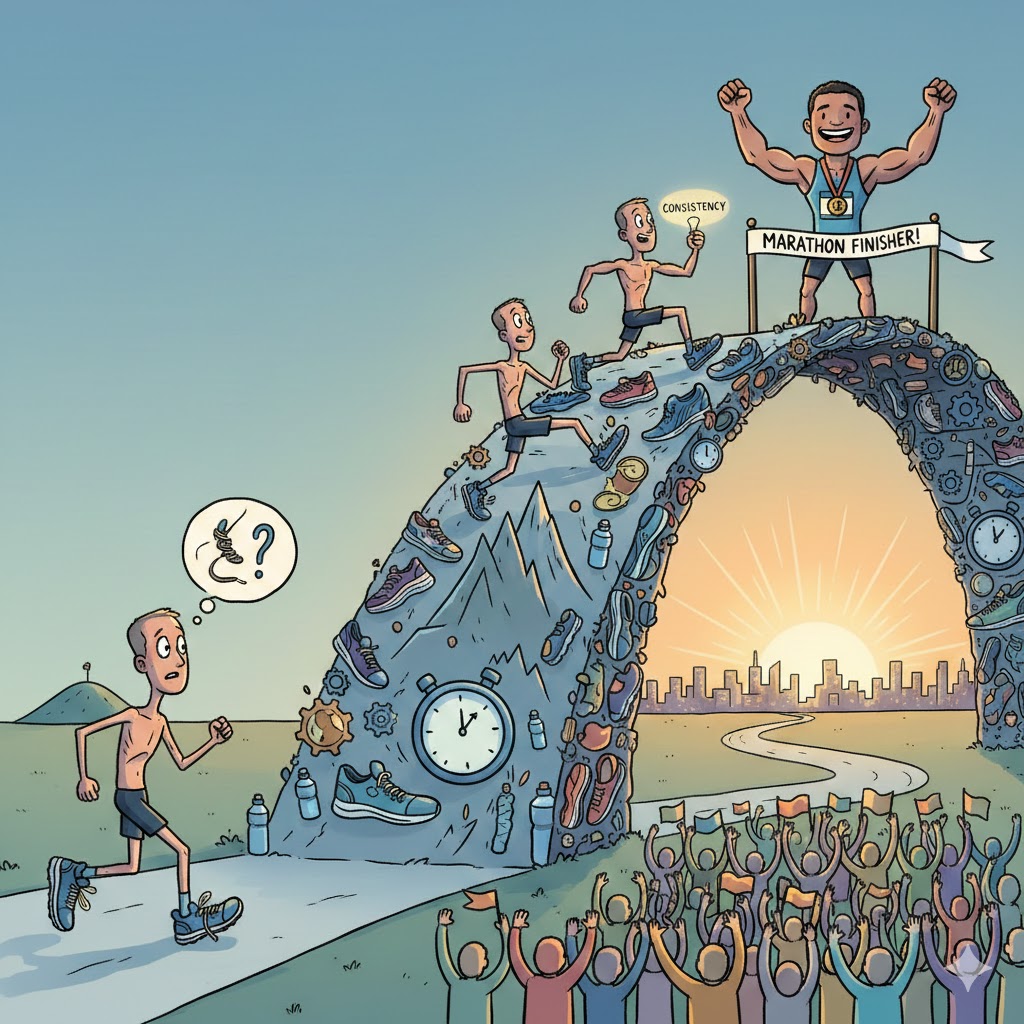
Now, here’s exactly how you do that step by step.
At the beginning, most runners start with 3–4 runs per week, around 30–35 minutes each. The key is that these runs should feel easy. You should finish them thinking, “I could do more.” That’s perfect.
Once you can comfortably run four times per week at 35 minutes, you begin the gradual progression. In week one, you might do four runs of 35 minutes. Then in week two, you keep three runs at 40 minutes and make one run slightly longer, around 45 minutes. That longer run becomes your first “long run.”
In week three, you move to three runs of 45 minutes, plus one long run of 55 minutes. After that, you keep increasing your easy runs by about five minutes each week, while your long run increases by about ten minutes.
Over about six weeks, many runners build smoothly to three easy runs of around 65 minutes plus one long run of around 90 minutes. At that point, you’ve created the endurance foundation that makes marathon training possible later.
Most importantly, this phase teaches your body to adapt without overload. Instead of chasing speed, you’re building durability, and durability is what prevents injuries.
Phase 2: The Safe Transition Into Faster Running (Strides)
Once you reach the 65/90 foundation, a lot of runners get excited and want to jump straight into hard workouts. However, that’s where injuries often appear. Instead, we transition into faster running gradually, and the safest tool for that is strides.
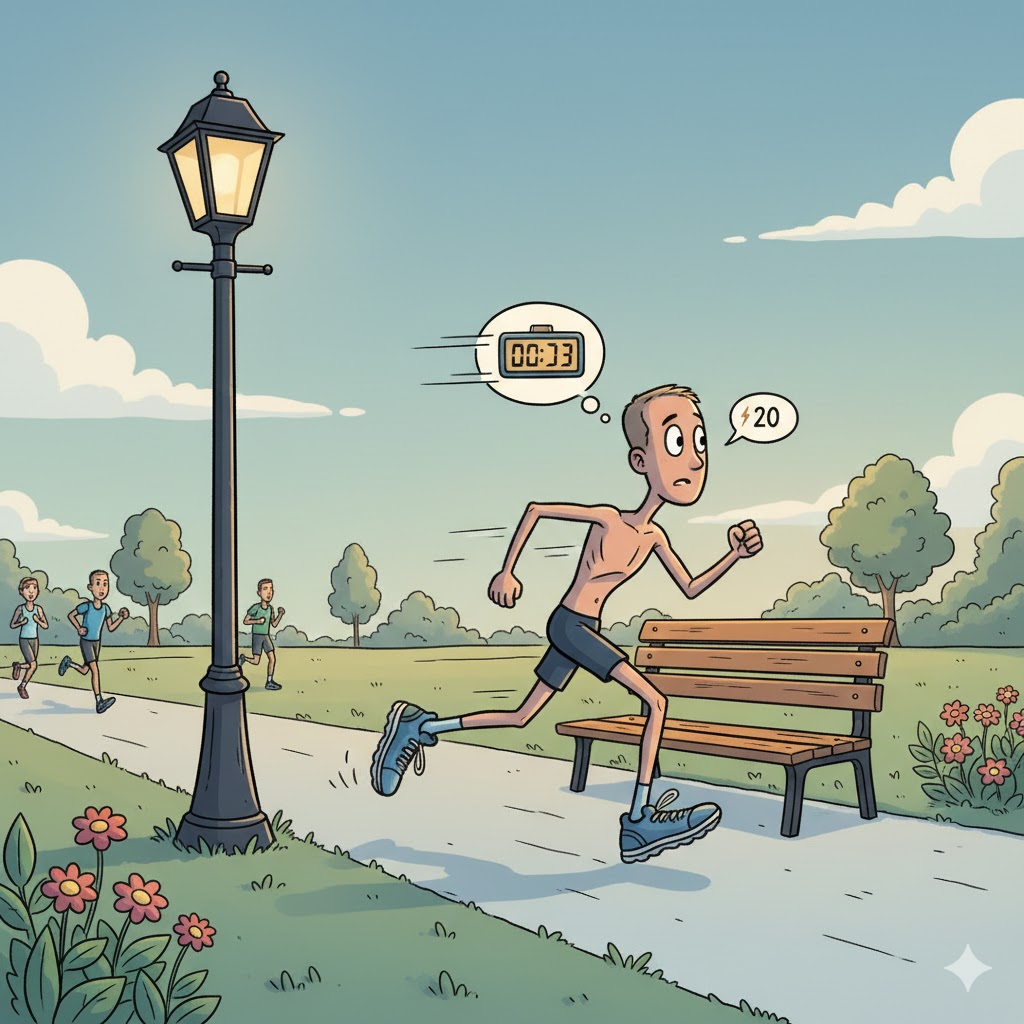
Strides are short bursts of controlled faster running, usually around your 5K effort. They are not sprints. They are relaxed, smooth accelerations that teach your body how to move efficiently.
Here’s the step-by-step way I introduce them.
In your first week after completing the foundation stage, you keep your normal running schedule, but you add just one small change. During one of your 65-minute easy runs, after about 30 minutes, you do five repetitions of 20 seconds faster running. Think of running between two landmarks, like a lamppost to a bench. After each stride, you jog easily until you feel fully recovered.
That’s it for week one. Simple, safe, and controlled.
In week two, we progress slightly. Instead of five single strides, we turn the session into something more structured. You warm up easily for about 20 minutes, then you complete three sets of five repetitions of 20 seconds at 5K effort, with jog-back recovery. Between sets, you jog easily for about three minutes. Then you cool down for 20 minutes.
In week three, the structure stays the same, but the reps become 30 seconds instead of 20. Then in week four, they become 40 seconds.
This gradual progression is powerful because it introduces speed without stress. You’re improving your mechanics and turnover, but you’re not overwhelming your tendons or joints.
Phase 3: Hill Sprints(The Secret Weapon for Beginner Runners)
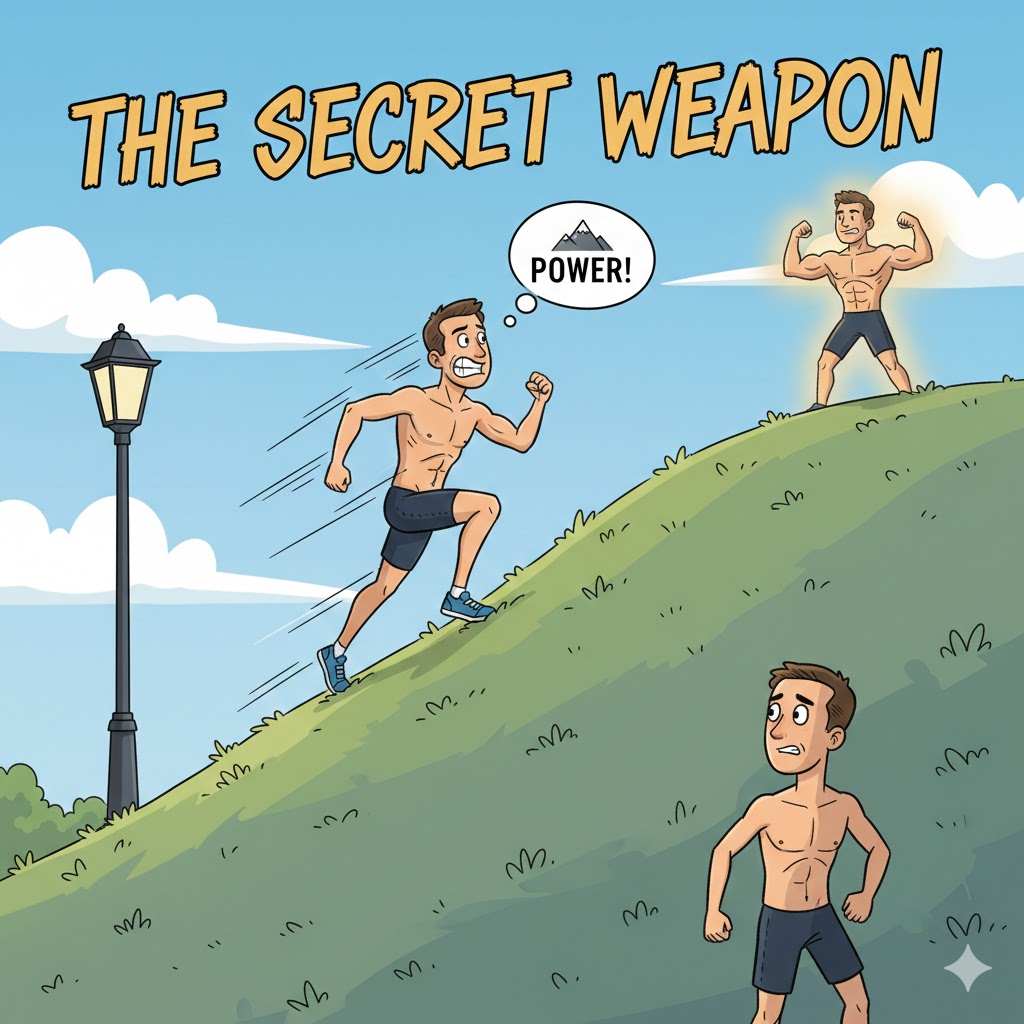
Now we get to one of the most transformational sessions for beginners: hill Sprints.
Hill blasts are short uphill efforts, usually around eight seconds, designed to improve running economy, stride mechanics, and glute activation. Many beginner runners shuffle, relying too much on hip flexors and calves. However, hill running naturally encourages stronger posture, better hip extension, and more powerful movement.
In the article here, is exactly how you add hill Sprints step by step. Hill Sprints work like strength training for runners. They teach your body to recruit the right muscles and improve your running economy. Many runners notice that easy paces start feeling smoother and faster within just a few weeks.
Phase 4: The Marathon Bridge (Where Endurance Becomes Marathon Fitness)
Once you have the foundation, strides, and hill blasts in place, you are no longer just “a beginner.” At this point, you’re becoming a strong runner with efficient mechanics and durability.
Now we build the bridge toward marathon-specific training. This phase is where your long run gradually extends beyond 90 minutes, and your weekly endurance becomes more marathon-focused. Because this transition to high-mileage blocks involves its own set of unique strategies, we’ll be saving that deep dive for a future talk. For now, your mission is to master the power and consistency you’ve built here.
🏃♂️ Your Road to Marathon Readiness
| Phase | Weekly Focus | Step-by-Step Progression | Outcome |
|---|---|---|---|
| 🧱 Foundation | Consistency + Durability | Build from 4×35 min → 3×65 + 90 min | Injury-resistant base |
| ⚡ Strides | Safe speed intro | 5×20 sec → 3×5 reps (20–40 sec) | Better turnover + mechanics |
| 🏔️ Hill Sprints | Power + Economy | 4 reps → Build to 6–8 reps (8 sec) | Stronger stride & glute drive |
| 🌉 Marathon Bridge* | Race endurance | Long run 90 min+ + maintain speed/hills | Marathon-ready fitness |
*Note: This phase is a deep topic for another day—we’ll cover high-mileage specifics in a future talk.
Why Coaching Makes This Journey Easier
🚀 Stop Guessing. Start Progressing.
Most runners don’t fail because they lack motivation—they fail because they lack a roadmap.
Coaching removes the guesswork, giving you the exact workload at the right time to keep you injury-free and improving week after week.
Exclusive Offer: Get Your First Month FREE
Ready to go from beginner to marathoner with a proven plan? Let’s talk.
Book Your Free Call Meet Coach T →The Emotional Closing: Your Finish Line is Waiting
Running a marathon isn’t just about the 26.2 miles on race day; it’s about the person you become during the months of training. It’s about the mornings you chose to show up when it was cold, the quiet strength you built on those long 90-minute runs, and the moment you realized that “impossible” was just a word you used before you started.
You don’t need elite genes or a lifetime of athletics to do this. You just need a roadmap and the courage to take the first step. Today’s struggle is tomorrow’s warm-up. Don’t let the fear of injury or the “beginner” label stop you from discovering what you are truly capable of.
The Conversion: Let’s Build Your Roadmap Together
Stop guessing your training and start building your legacy.
If you’re ready to bridge the gap from beginner to marathoner with a plan that keeps you healthy, strong, and confident, I’m here to help.
🚀 Claim Your Exclusive Offer: Book Your Strategy Call & Get Your First Month FREE
Let’s turn your “someday” into a race date.
– Coach T, NASM-CPT
**Please note that the information shared in this article reflects my personal knowledge and experiences. It is not intended as professional advice and should not be relied upon as such. Always consult with a qualified expert or professional before making any decisions based on the content provided